
Reframing Photography Archives Through Asset‑Based Community Development (ABCD)
This year should be an exciting year for photography as it marks the 200th anniversary of the medium’s invention. Across the channel, France is leading the commemoration with great aplomb through its major, country‑wide programme, the Bicentenaire de la Photographie (2026–2027). However, in the UK, this celebration will ring hollow for stewards of independent photography archives around the country. Today, most are grappling with a stark and uncomfortable reality: funding is limited and shrinking, capacity is stretched, resulting in an upward struggle to preserve the nation’s photographic culture.(1) (2)
The funding statistics make for sobering reading. Local government spending on culture has declined sharply with a 48% decrease between 2009/10 and 2022/23.(3) These reductions leave archives and other cultural organisations more dependent on charitable and national grants that are increasingly small and competitive. As example, the National Archives has allocated grant support to 200 archives or collections over the past 6 years. However, the average value of funds granted was limited to only £2,441 per organisation over this period.(5) When applying to this national fund, photography archives must also compete with all other unique, unpublished material collections. As a result, many photography-led organisations now face existential threats. For example, the closure of the Photographic Networks Collection in 2024, an important organisation that shared invaluable archive knowledge and expertise, marked a symbolic and practical loss. (4) It also exposed the truth that the country has no photography-dedicated organisation to support archives in protecting, activating, and promoting the nation’s photographic heritage. For many within the sector, this has created a sense of despair. Without a “knight in shining armour” — a major philanthropic intervention, or a dedicated national body representing archive independents — the future of our photographic cultural assets appears bleak.
Yet perhaps the real opportunity lies not in waiting for rescue, but in transforming how we think about archives, communities, and the resources already around us. From my previous work with Hastings Commons on grassroots community development, I learned that practical transformation rarely comes from top‑down solutions. It comes from communities working with what they already have. This is exactly the premise of Asset‑Based Community Development (ABCD) — a methodology that shifts the narrative from scarcity to abundance, from deficits to strengths. ABCD emphasises that communities are rich in assets: skills, relationships, associations, spaces, institutions, and shared histories. Rather than viewing people as service users, ABCD sees them as co‑creators and leaders of change. According to the VCS Alliance, ABCD is “an appreciative way of working” that builds on existing capacities, emphasising that people are the experts and everyone has gifts to contribute. This approach is deeply participatory and emancipatory. It gives communities agency in shaping their own futures, while fostering the social networks necessary for resilience and wellbeing. Research by Nesta found that ABCD helps local authorities build stronger resident‑to‑resident relationships, improve mental and physical wellbeing, and reduce long-term demand for crisis services by cultivating flourishing local ecosystems. In other words, ABCD does not just support societal connection — it builds healthier, more connected, more empowered communities.(6)
Why Photography Archives Are a Natural Fit for ABCD
Photography archives, especially independent collections, hold extraordinary potential as civic tools. They are not just cultural assets; they are reservoirs of memory, identity, belonging, and shared experience. They evoke emotional responses, connect generations, and provide tangible touchpoints for community storytelling. This makes them exceptionally powerful anchors for ABCD-driven initiatives. ABCD thrives when communities have a shared asset around which relationships and activities can grow. A photographic archive — whether rooted in music culture, local history, activism, or social movements — provides exactly that. It invites people to share stories, identify with place, reflect on change, and contribute knowledge. It enables everything from story circles to volunteer-led digitisation, intergenerational workshops, and community-curated exhibitions. These are not just heritage activities — they are catalysts for community cohesion, connection, and civic pride.
Local Authorities Are Already Showing the Way
Crucially, several UK councils have already integrated ABCD into their community development strategies, demonstrating its impact and scalability. In Barnsley, Redbridge, Cleveland, Gloucester, Leeds and Oldham, councils have shifted operationally from governing for communities to governing with them through resident-led health and wellbeing, environment and other community action initiatives. Highlighted within the above NESTA research, these examples show a clear national shift: local authorities are moving away from service delivery models towards partnership-driven, community-led approaches. I believe this wider community-organisation shift now creates a significant opportunity for photography archives to position themselves not only as custodians of culture but as active civic partners.
There is also opportunity to build on the ABCD learning and tools developed over the past decade by local authorities and their partners. Rather than reinventing the wheel, we can learn from, adopt and adapt ABCD strategies and tactics, roles and evaluation approaches that have proved fruitful.
Reframing Photography Archives as Civic Assets
If we adopt this mindset nationally, photography archives can be reimagined not just as repositories of images but as engines of community wellbeing. Seen through this lens, working with cultural photography archives can:
- support creative participation
- reduce social isolation
- activate community memory
- strengthen local identity
- provide platforms for intergenerational exchange
- and serve as catalysts for volunteer networks and shared learning
In a time of funding scarcity, this methodology can tap into other imaginative community initiatives — for example, time‑banking, where archive volunteers exchange hours of service for local benefits, and buddy schemes where people give and receive mutual support that dovetails with local activities. Such initiatives resonate strongly with ABCD’s emphasis on local assets and mutual support. Archive engagement activities can also mirror Creative Health programming such as arts social prescribing which is increasingly offered through GP surgeries and primary care networks in the UK.
Looking Forward
The challenges facing independent photography archives in 2026 are real and pressing. Funding cuts have created structural vulnerabilities that cannot be ignored. But the ABCD approach teaches us something profound: money alone has never been the sole driver of resilient, thriving communities. What truly strengthens an ecosystem is the interplay between available resources and active, empowered people. Even modest funding, when combined with community capacity, can produce disproportionate returns.
Progressive local authorities have demonstrated that when institutions work with people, rather than for them, social impact compounds. Their ABCD strategies reveal a consistent pattern:
resident engagement increases
loneliness and isolation decrease
local ownership grows
and community-led initiatives begin to sustain themselves over time
This is the real lesson for the photography archive sector. While large national grants may often be out of reach, the potential of community power multiplied by even small-scale funding is enormous. With this viewpoint, more archives can become living civic assets — spaces where people gather, learn, share skills, exchange stories, and build relationships. They can become hubs for time-banking, skill-sharing, creative collaboration and intergenerational exchange. And when integrated with social prescribing, they tap into evolving community-powered cultural health and wellbeing programming. In this model, funding is not the rescuer; it is the catalyst that unlocks the energy already latent in communities.
So perhaps the question is not “who will save us?” but “how can we activate what we already have?” ABCD offers a compelling answer. By reframing photography archives as community-powered civic infrastructures — and by inviting people to contribute time, talent and imagination alongside grant-sourced financial support — we can ensure these collections not only survive, but actively enrich people’s lives.
In the end, it may be this powerful combination of targeted investment and human contribution that allows independent photography archives to chart a more sustainable future. And if we embrace this shift, we may discover that the assets we thought we lacked were present all along — waiting to be mobilised, connected, and transformed into something far greater than the sum of their parts.
If this argument for protecting our independent photography archives through ABCD methods interests you, I’d love to hear your thoughts.
Sources
The National Archives funding for programming is decreasing due to freezes in government budgets that are no longer tracking inflation. Main Estimates memorandum 2024-25 – The National Archives, https://cdn.nationalarchives.gov.uk/documents/main-estimate-memorandum-2024-25.pdf (accessed 17/02/26)
Between 2010 and 2022, UK government spending on culture per person dropped by 13% in comparison to same time period increases of 27% per head in France, 33% in Germany and 40% in Belgium. Arts Council England Review, 15 December 2025 https://www.gov.uk/government/publications/arts-council-england-an-independent-review-by-baroness-margaret-hodge/annex-2-arts-council-england-review-supporting-data (accessed 17/02/26)
The State of the Arts - Campaign for the Arts and Warwick University, 2024 https://www.campaignforthearts.org/reports/the-state-of-the-arts/ (accessed 17/02/26)
Photographic Networks Collection, 9 August 2024. https://www.photocollections.org.uk/members/news/pcn-closure (accessed 17/02/26)
Our Funding So Far, the National Archives https://www.nationalarchives.gov.uk/archives-sector/grants-and-funding/our-vision/our-funding-so-far/ (accessed 17/02/26)
Asset-based Community Development for Local Authorities, NESTA, 22 December 2020 https://www.nesta.org.uk/report/asset-based-community-development-local-authorities/ (accessed 17/02/26)
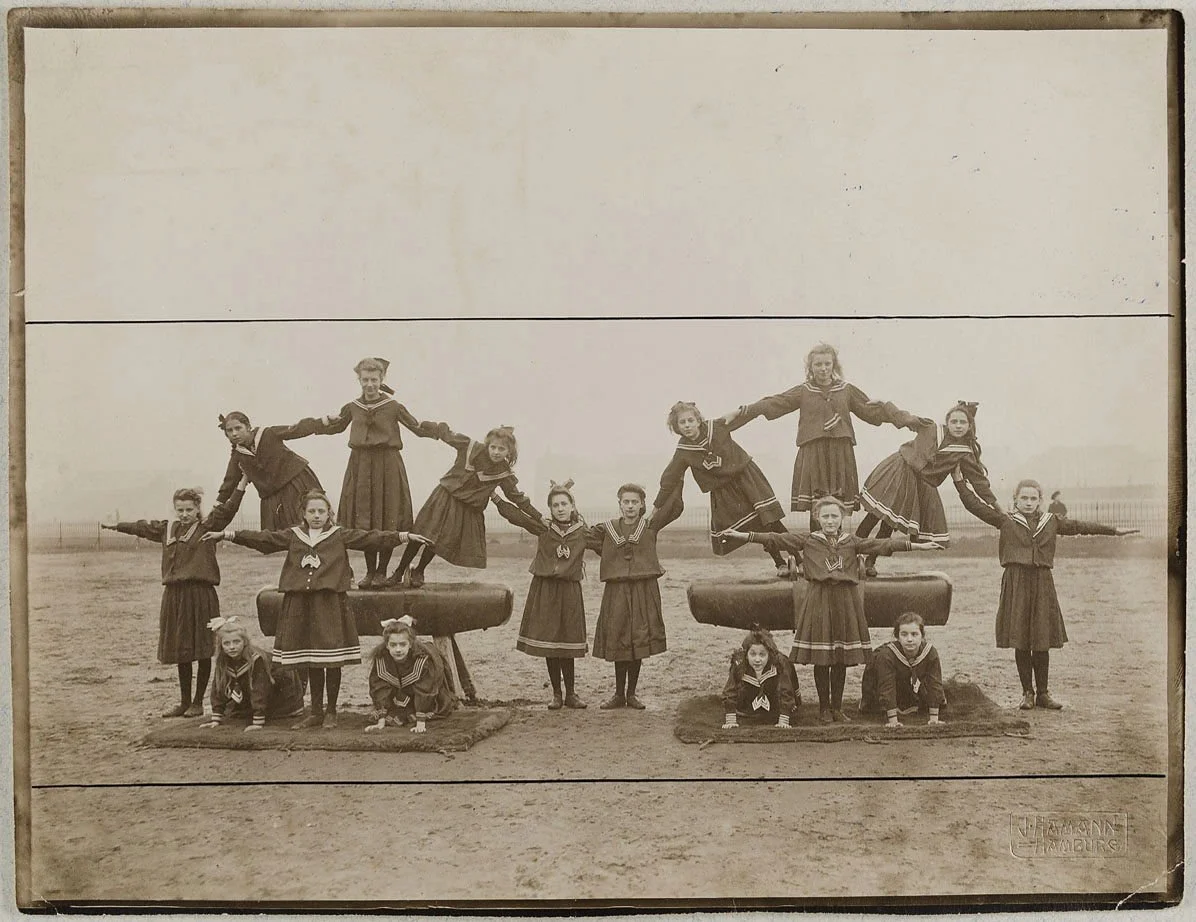
Image sourced from the Public Domain Image Archive / MKG Collection Online